

Hawaiian Wear Etiquette: What's Respectful (and What's Not)

Every year, millions of visitors buy an aloha shirt or a muumuu somewhere on their trip to Hawaii. Most never stop to ask a basic question: is it okay for me to wear this? The short answer is almost always yes - aloha wear was designed from the start to be shared. But there's a real difference between wearing it well and wearing it carelessly, and that difference comes down to a few things: what you're wearing, where it came from, and how you wear it.
This isn't about strict rules or gatekeeping. It's about understanding the story behind the clothing so you can wear it with the same spirit it was made for.
Where Aloha Wear Actually Comes From
The aloha shirt itself is a blend of cultures - Hawaiian, Japanese, Chinese, and Filipino design traditions all shaped it in the early 20th century, stitched together by Honolulu tailors and dry goods stores. It was never meant to be a costume or a single "ethnic" symbol. It was, and still is, working clothing for island life: something a plantation worker, a bank teller, and a governor could all wear on the same Friday.
That mixed, welcoming history is exactly why aloha wear travels so well. It was built to be worn by anyone who lives the island lifestyle - not just people born there.
What's Considered Respectful
- Wearing it as everyday clothing, not a costume. An aloha shirt with shorts and sandals reads as normal island style. An aloha shirt paired with a grass skirt, a coconut bra, or a fake lei "costume" for a themed party crosses into caricature.
- Buying from Hawaii-based, Hawaii-made brands when you can. Supporting local textile printers and small manufacturers keeps the tradition alive instead of letting it get diluted into mass-produced novelty prints made overseas with no connection to the islands.
- Wearing traditional or formal pieces - like a holoku or a wedding muumuu - for the occasions they're meant for, rather than as a generic "tropical vacation" outfit.
- Learning the name of what you're wearing. Knowing the difference between a muumuu, a holoku, and a cabana set shows the same basic respect you'd want someone to show for your own culture's clothing.
What to Avoid
- Treating aloha wear as a "beach vacation costume" rather than clothing you'd genuinely wear again
- Buying cheap knockoffs printed with generic "tropical" patterns that have no real tie to Hawaiian design history, especially from big-box souvenir shops at the airport
- Combining pieces from unrelated cultures (a lei, a sarong, and a bindi, for example) into one "tropical" look - this flattens distinct cultures into a single stereotype
- Assuming loud, novelty prints (cartoon coconuts, neon cocktail glasses) represent authentic Hawaiian design - most were created for tourist markets, not by Hawaiian textile designers
How to Find the Real Thing
Authentic aloha wear is easier to spot once you know what to look for:
- Check where it's made. Look for "Made in Hawaii" on the label, not just "Hawaiian-style" printed on the tag.
- Look at the print details. Authentic prints tend to reference real island elements - taro leaf, palaka plaid, native flowers, ocean life - rendered with some design intention, not just a generic palm tree clip-art repeat.
- Ask who designed it. Brands with real roots in Hawaii are usually happy to tell you about their designers and printers.
- Buy from local shops or their online stores rather than resellers who source unlicensed "Hawaiian" prints from anywhere.
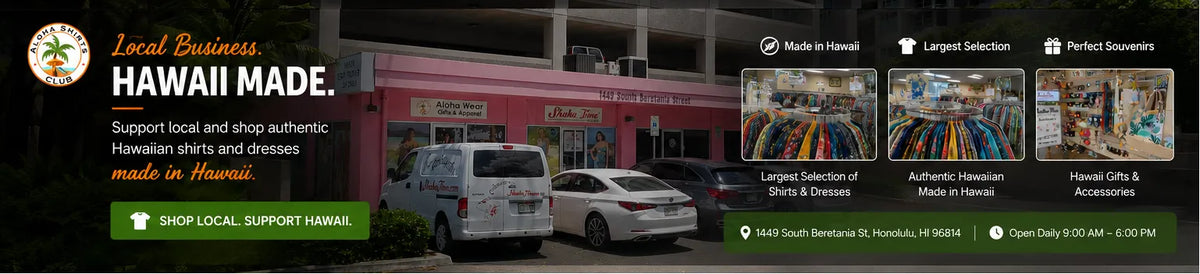
At Aloha Shirts Club, every piece is made in Hawaii, which means when you buy an aloha shirt or a muumuu from us, you're supporting the same local manufacturing tradition the garment itself comes from - not a copy of it.
FAQ: Aloha Wear Etiquette
Is it okay for a visitor to wear an aloha shirt in Hawaii?
Yes. Aloha shirts are everyday wear for locals and visitors alike, and have been for decades. There's no rule against wearing one as a tourist - the shirt was designed to be shared.
Is a muumuu considered a costume?
No, a muumuu is a genuine everyday and formal garment worn by women in Hawaii for generations. It becomes a costume only when it's paired with stereotypical "tropical" props for a themed party rather than worn as real clothing.
Should I avoid wearing a lei if I'm not from Hawaii?
Leis are traditionally given as a gesture of welcome, celebration, or love, and are meant to be worn by whoever receives one, regardless of where they're from. Buying and wearing a lei respectfully - rather than treating it as a costume accessory - is completely appropriate.
What's the difference between "Hawaiian print" and authentic aloha wear?
"Hawaiian print" is often used loosely to describe any tropical-looking pattern, regardless of origin. Authentic aloha wear is designed and manufactured in Hawaii, drawing on real cultural and natural motifs rather than generic tropical clip art.
Ready to wear the real thing?
Shop authentic, Hawaii-made aloha shirts at Aloha Shirts Club →




)